 +44 02077326383
 info@blessedexchange.com
- 9 Jan
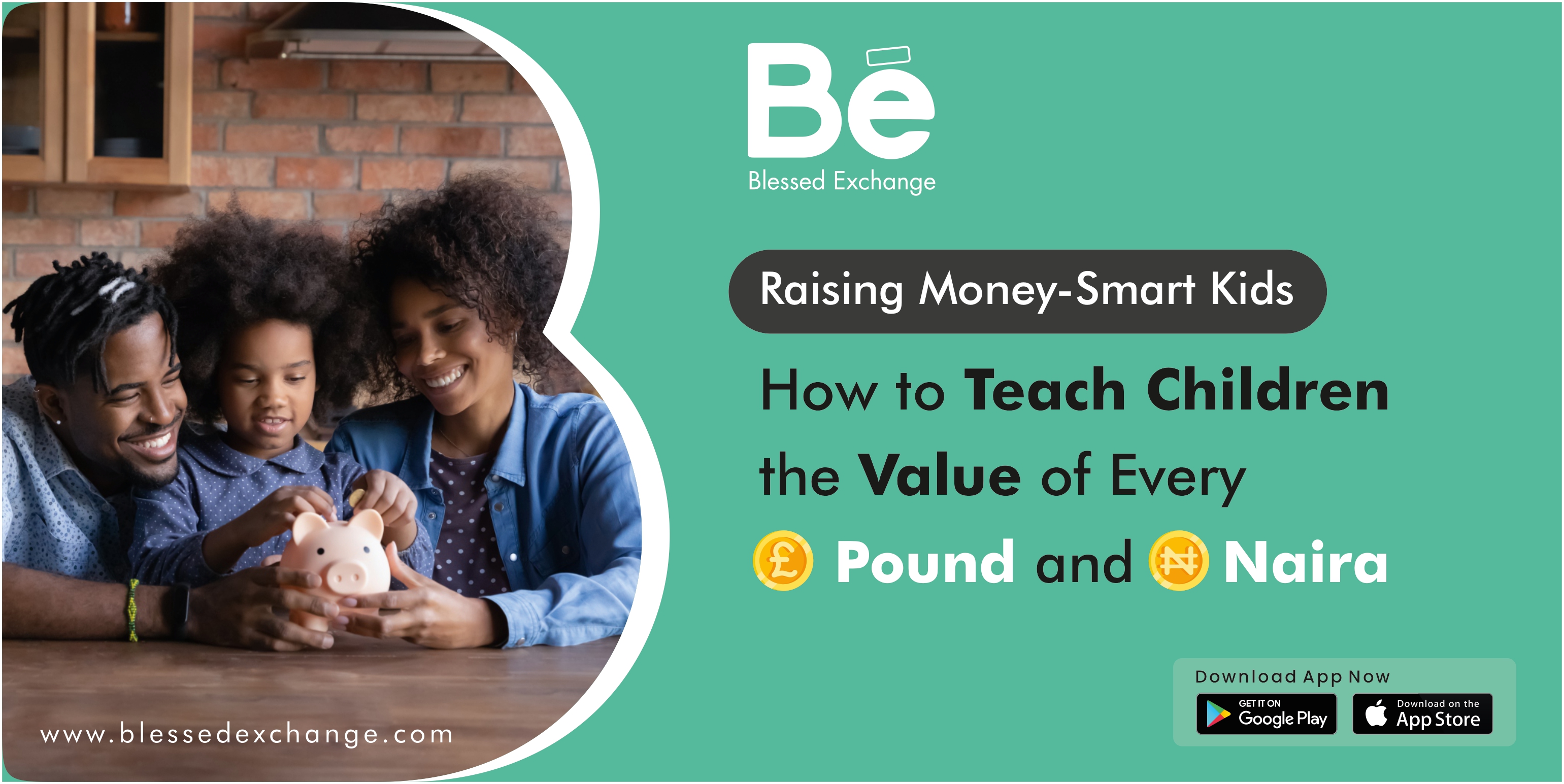
For many Nigerian parents living in the UK, teaching children about money goes beyond basic saving habits. It’s about preserving cultural values, encouraging responsibility, and helping them understand the connection between the life they live abroad and the family they support in Nigeria. Raising money-smart kids ensures they grow into confident, grounded adults who respect the value of every pound and every naira.
Here are practical, meaningful ways to help your children build strong money habits from an early age.
1. Start with Simple Conversations About Money
Children naturally learn by watching and asking questions, so instead of keeping financial matters hidden, it’s helpful to introduce money in simple, age-appropriate ways. You can explain the cost of everyday items, talk about the difference between needs and wants, and share practical examples of how you manage household expenses. These small, open conversations create a strong foundation for understanding and responsible attitudes toward money.
2. Teach Them How to Save with Purpose
A great way to build financial discipline in children is by teaching them to save toward something meaningful. This can be done by setting up a physical jar or a digital savings folder, encouraging them to put aside part of their allowance or gift money, and celebrating their progress along the way to keep them motivated. Through this simple practice, they learn the value of delayed gratification, a lifelong skill that plays a major role in financial success.
3. Introduce Budgeting Through Everyday Activities
Budgeting doesn’t need to be overwhelming, especially for children. Simple, everyday activities can teach them how planning works, like comparing prices during shopping trips, giving them a small budget to manage during a family outing, or helping them divide their pocket money into categories such as spend, save, and share. These real-life experiences show them how to make thoughtful choices within limits and build practical money skills early on.
4. Explain Currency Differences Between the UK and Nigeria
For children born or raised abroad, learning the value of the naira helps them stay connected to their roots. Parents can make this both fun and educational by showing exchange rates in simple, child-friendly terms, explaining why money is sent home, and discussing how those funds support family, education, or community projects in Nigeria. This approach helps children appreciate the importance of both currencies and understand the effort that goes into earning and managing money responsibly.
5. Model Good Financial Behaviour as a Family
Children learn best by watching their parents. When they see you manage money responsibly, whether budgeting, saving, or supporting relatives back home, they naturally follow the same values.
This is where Blessed Exchange supports families. With simple transfers, transparent rates, and quick delivery, it helps parents demonstrate reliability and discipline in how they manage and send money. Using a trustworthy service becomes a real-life example of making informed financial choices.
6. Encourage Generosity and Responsibility Together
Money-smart kids aren’t just good savers, they’re thoughtful givers. Teach them the joy of supporting family or contributing to small needs back home. Even a small amount set aside for sharing teaches empathy, gratitude, and financial planning.
Final Thoughts: Small Lessons Today Shape Confident Adults Tomorrow
Raising children who understand the value of money doesn’t require complex tools—just consistency, communication, and meaningful examples. When parents take time to teach these lessons, they help their children grow into financially aware, confident individuals who respect the value of every pound and every naira.
And with services like Blessed Exchange making cross-border money management easier, families can lead by example and equip the next generation with the skills that truly matter.