 +44 02077326383
 info@blessedexchange.com
- 4 Sep
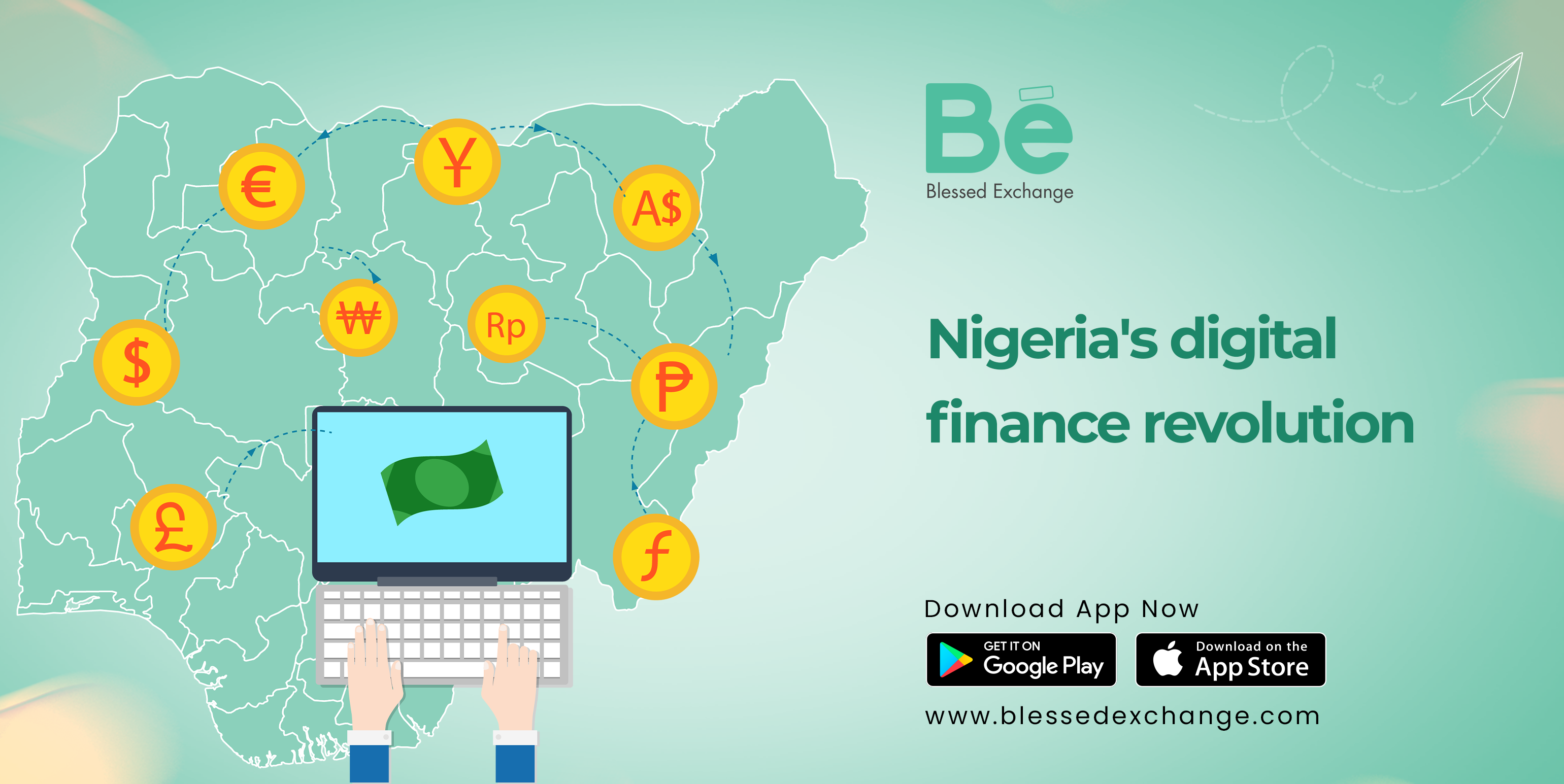
Nigeria's financial landscape is changing rapidly. From mobile banking and digital wallets to instant payments and fintech platforms, technology is changing how people and businesses manage, move and access money.
For consumers, digital finance means greater convenience. For businesses, it can mean faster payments, improved cash flow and easier access to financial services. And for Nigerians living abroad, the growth of digital finance is also making it easier to stay financially connected with family, businesses and opportunities back home.
A shift from cash to digital
Cash remains an important part of Nigeria's economy, but digital payment methods are becoming increasingly common. The Central Bank of Nigeria reported strong growth across electronic payment channels, including mobile and POS payments.
This shift is being driven by a simple demand: people want financial services that fit into their everyday lives.
Instead of visiting a branch for every transaction, users can increasingly send money, pay bills, receive payments and manage their finances through digital platforms.
The result is a financial ecosystem that is becoming faster, more connected and more convenient.
Digital payments are changing how businesses operate
For Nigerian businesses, digital payments are more than just a convenient alternative to cash.
They can help businesses:
- Receive payments more quickly
- Reduce dependence on physical cash
- Manage transactions more efficiently
- Serve customers through digital channels
- Keep better records of financial activity
- Reach customers beyond their immediate location
This is particularly important for small and growing businesses. As more customers become comfortable with digital payments, businesses that offer convenient payment options can make it easier for customers to complete purchases and stay connected.
Recent NIBSS data highlights just how significant this shift has become. Nigeria's electronic payment ecosystem processed NGN 1.07 quadrillion in transactions over the year covered by its latest report, while NIBSS Instant Payment transaction volumes reached 11.2 billion.
Fintech is expanding financial access
One of the most important parts of Nigeria's digital finance revolution is financial inclusion.
Digital financial services can help people access payments and other financial services through mobile phones and internet-connected devices, reducing some of the barriers associated with traditional banking.
The World Bank's Global Findex data shows that digital access is becoming an increasingly important part of how people use financial accounts and make payments.
For individuals and businesses that may have previously faced difficulties accessing traditional financial services, digital platforms can create new opportunities to participate in the formal economy.
A more connected financial ecosystem
Nigeria's digital finance journey is also moving beyond domestic payments.
The Central Bank of Nigeria's Payments System Vision 2028 places emphasis on interoperability, security, inclusion, innovation and stronger cross-border integration.
This matters for Nigerians who live, work or run businesses across borders.
Whether it is supporting family members, contributing to a business, paying for important expenses or managing financial commitments in Nigeria, reliable international money movement plays an important role in keeping these connections active.
For Nigerians in the diaspora, digital money transfer services can make these transactions more convenient while reducing some of the friction traditionally associated with international transfers.
Security must grow alongside convenience
As digital finance expands, security becomes just as important as speed.
Consumers and businesses need to remain alert to fraudulent messages, suspicious payment requests, fake platforms and attempts to obtain sensitive account information.
Nigeria's regulators are also strengthening the payment ecosystem. In 2026, the CBN introduced updated measures around instant payments, including stronger fraud monitoring, identity verification and customer controls.
For users, the message is simple: choose trusted financial services, protect your personal information and always verify transaction details before sending money.
What the future could look like
Nigeria's digital finance revolution is still developing.
The launch of Payments System Vision 2028 signals a continued focus on building a secure, inclusive and interoperable payments ecosystem.
For businesses, this could mean more opportunities to accept digital payments, reach new customers and participate in a more connected economy.
For individuals, it could mean easier access to financial services and more control over everyday transactions.
And for Nigerians living abroad, it could create even more seamless ways to support families, manage commitments and contribute to opportunities back home.
The role of trusted money movement
Digital finance is not only about technology. At its heart, it is about making financial connections easier.
As Nigeria becomes increasingly digital, the ability to move money securely and conveniently across borders will remain an important part of that connection.
At Blessed Exchange, we understand that every transfer has a purpose — whether it supports family, education, healthcare, business or an important opportunity.
As the financial world continues to evolve, staying connected should be simple, secure and accessible.
The future of finance is digital. The future is connected.